The Clean-Hand Protocol: Engineering a Flawless Patina
A common myth among beginners is that "seasoning" means letting tea residue accumulate until the teapot looks dark and sticky. This is a myth. That greasy layer is just dried tea sugar and bacteria—not a true patina.
At DXY ZISHA, we advocate for the "Clean-Hand Protocol." A genuine patina (Bao Jiang) is a result of tea oils being absorbed into the dual-pore structure and slowly oxidizing. The result should be jade-like, breathable, and perfectly clean to the touch.
Ore Mineralogy: The Texture of Time
Different ores produce vastly different visual results based on their mineral composition. Understanding your teapot's "personality" is key to proper care:
- Lvni (Jade-like): High in quartz. When kept meticulously clean, it develops a semi-translucent, cold jade-like glow.
- Duanni (Satin-like): Highly porous with a large mineral "skeleton." It develops a sophisticated, vintage satin luster.
- Zhuni (Porcelain-like): High density and low porosity. It develops a patina the fastest, eventually resembling a reflective glass glaze.
- Zini (Bronze-like): The most balanced and porous ore. It develops a deep, internal bronze-like luster.
Step 01 / The Dry-Pour (Prevention)
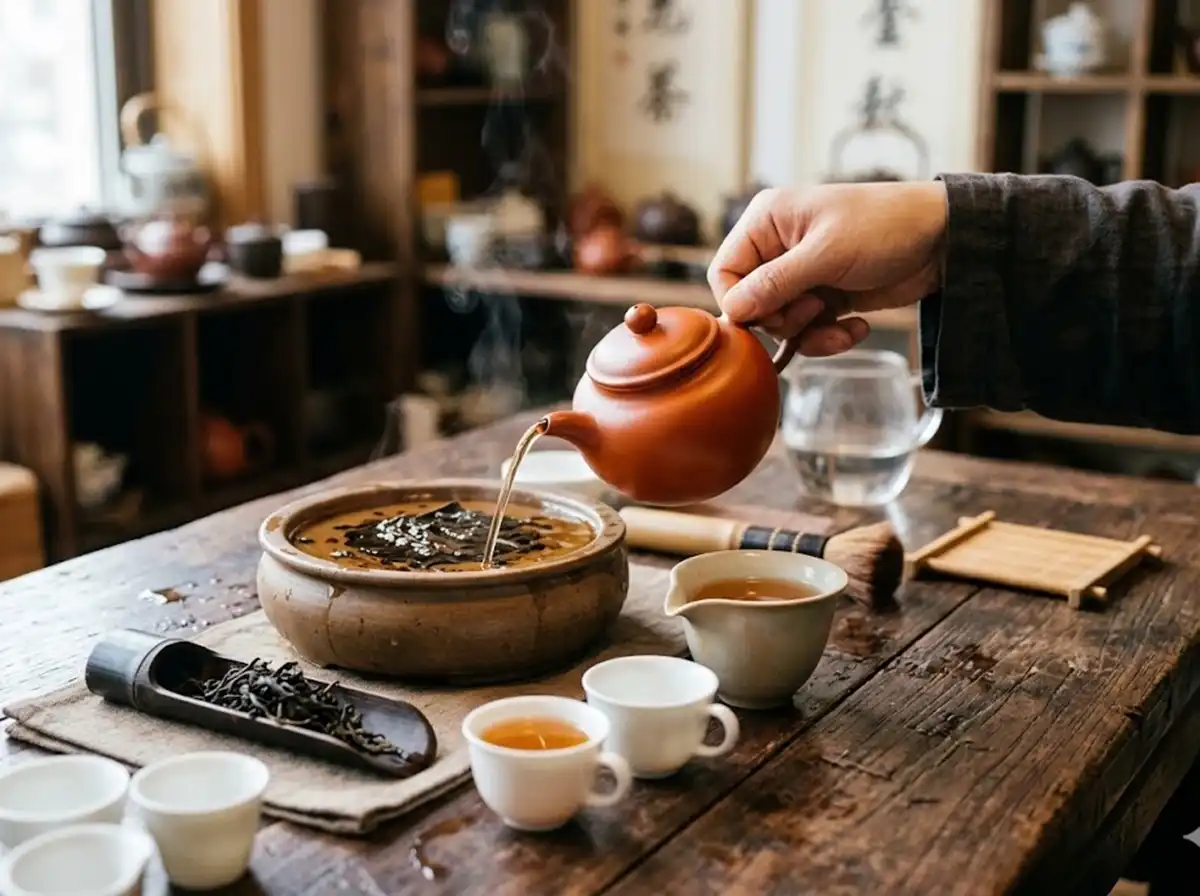
Abandon the habit of pouring tea over the exterior (Wet Pouring). To achieve a uniform glow, you must keep the surface dry. If tea drips from the spout, wipe it immediately with a damp cloth. This prevents "water maps"—stubborn mineral stains that ruin the aesthetic of the clay.
Step 02 / The Heat Flush (Activation)
Never leave used leaves in the pot overnight. After your session, rinse the interior and exterior with boiling water. This melts away surface sugars and opens the mineral pores while the clay is still thermally expanded.
Step 03 / The Hot Buff (Physical Polishing)
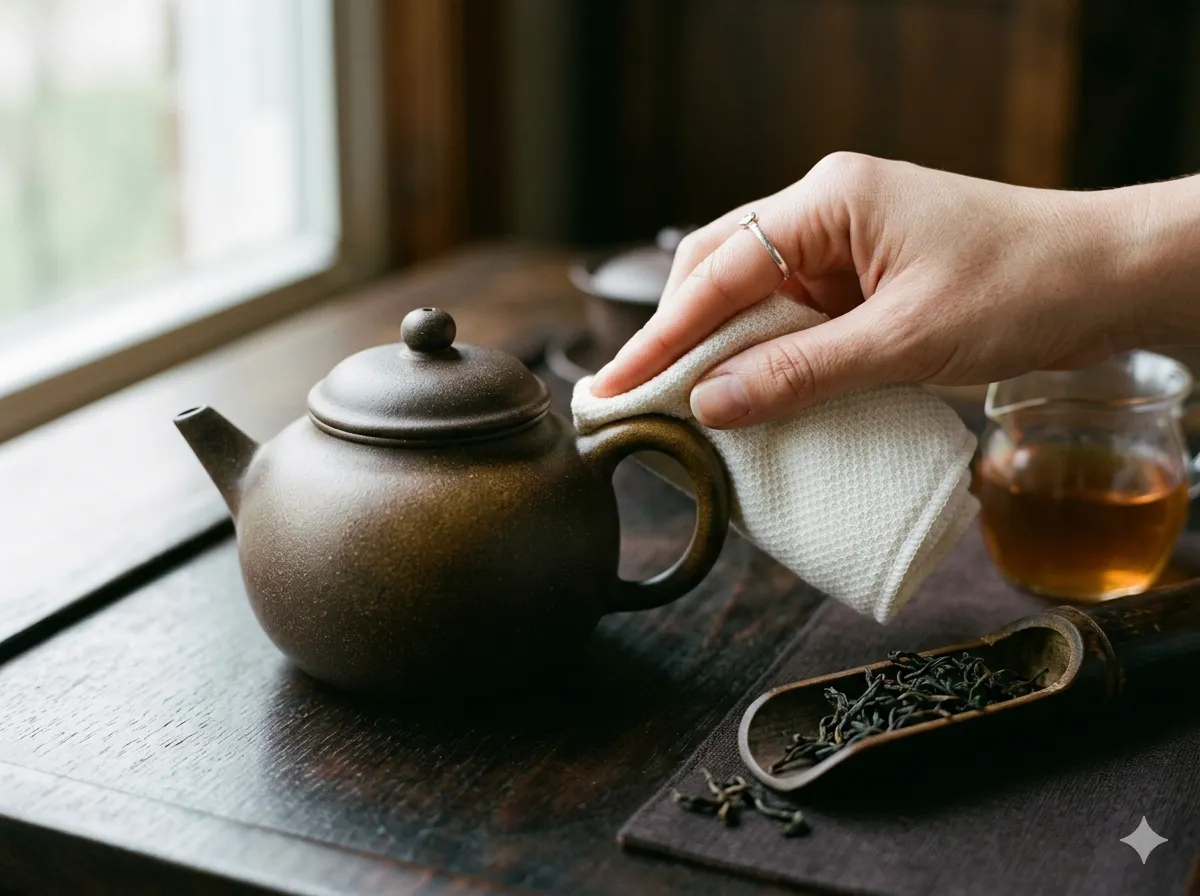
This is the critical minute. While the pot is still steaming hot, use a dry cotton cloth to buff the surface rapidly and gently. This friction distributes the oils into the mineral structure. You will see the texture shift to a soft, silk-like sheen instantly.
Step 04 / The Rest Period (Oxidization)
Zisha needs to breathe. Leave the lid off and air-dry for 24 to 48 hours. This allows the oils to oxidize and "set." A dry pot is a glowing pot.
Slow is Fast
Do not chase the artificial "greasy shine" of poorly maintained pots. A genuine patina is a slow reward for your discipline. One month of this protocol brings a soft touch; one year brings a soul-stirring glow. The patience of living with the mineral is the true joy of Zisha collecting.
Want to learn more about the technical data behind patina maintenance? Visit our Patina Maintenance Protocol.