Classic Mastery: The 10 Essential Yixing Teapot Shapes
Have you ever wondered why the same tea tastes remarkably different when brewed in different teapots? In the world of Yixing Zisha, the shape (Form) is never just about visual appeal. It is a sophisticated balance of thermodynamics, fluid mechanics, and tactile ergonomics.
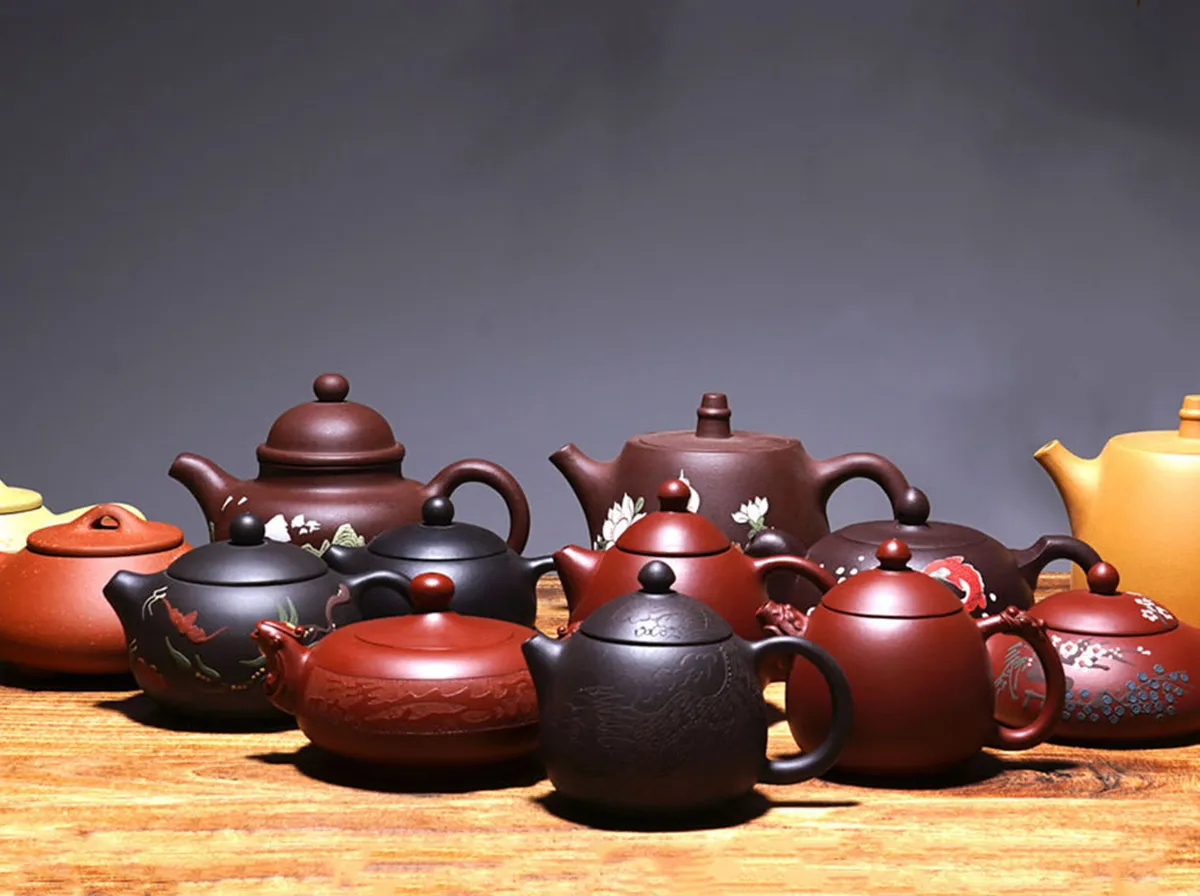
For a beginner, the variety of teapots can be overwhelming. We have curated the 10 most iconic classic shapes that have survived centuries of scrutiny and remain the gold standard for tea lovers today.
01 / Shipiao (Stone Gourd) — The King of Structure
- The Look: A stable, triangular body with three tiny "bridge" feet and a straight, short spout.
- Why it works: Its geometry ensures a low center of gravity and stable Infusion Physics, creating a steady "breathing" space for leaves.
- Best For: Roasted Oolongs and Pu-erh. It is the "must-have" foundation for any collection.
02 / Xishi (Lady Xi Shi) — The Curve of Elegance
- The Look: A plump, round body and an inverted handle. Named after one of the Four Beauties of ancient China.
- Why it works: The spherical shape allows leaves to expand evenly. Note: While the form is beginner-friendly, choosing the right clay mineral (like Zini) is key for new collectors.
- Best For: Newcomers seeking a smooth pour and comfortable grip.
03 / Fanggu (Archaism) — The Scholar's Choice
- The Look: A flattened, drum-like body with a wide mouth and a sturdy, resilient neck.
- Why it works: The wide mouth facilitates easy leaf loading and cleaning, making it a functional masterpiece of Structural Anatomy.
- Best For: Heavy-bodied teas and daily functional use.
04 / Duoqiu (Stacked Spheres) — Geometric Perfection
- The Look: A masterpiece of proportion, consisting of three interlocking spheres (body, lid, and knob).
- Why it works: It focuses on the vertical "Qi" (energy), creating a powerful and focused water flow column.
- Best For: Collectors who appreciate minimalist, mathematical beauty.
05 / Jinglan (Well Fence) — The Anchor of Calm
- The Look: Inspired by ancient well fences. It is cylindrical, upright, and visually sturdy.
- Why it works: Offers a stable center of gravity; its flat surfaces are ideal for showcasing Keri (engraving).
- Best For: Grounded tea sessions and long-term patina development.
06 / Xiaoying (Smiling Cherry) — The Flow of Joy
- The Look: A tall, elegant body with a signature curve where the spout meets the body, resembling a subtle smile.
- Why it works: Focuses on the fluidity of the line, providing an elegant tactile experience during the pour.
- Best For: Those moving from "beginner" to "connoisseur" status.
07 / Hanwa (Han Dynasty Tile) — The Bold & Direct
- The Look: A short, wide cylinder with a lid shaped like an ancient roof tile.
- Why it works: Massive mouth diameter allows heat to dissipate quickly, protecting delicate leaves from being "over-cooked" by trapped steam.
- Best For: Green teas, White teas, and wide-leaf botanicals.
08 / Qinquan (Qin Dynasty Weight) — The Symbol of Authority
- The Look: Shaped like an ancient measurement weight. Tall, heavy-set, and imposing.
- Why it works: The vertical space is perfect for aged teas that require consistent, high-thermal mass.
- Best For: Dark tea (Heicha) and aged Pu-erh.
09 / Zhujie (Bamboo Section) — Nature's Resilience
- The Look: A Huaqi (Naturalistic) design mimicking bamboo segments, symbolizing moral integrity.
- Why it works: The textured "nodes" provide natural mechanical friction for a secure grip.
- Best For: Enthusiasts who appreciate the fusion of bionic art and traditional motifs.
10 / Shuiping (Level Pour) — The Gongfu Standard
- The Look: Small, dainty, and perfectly balanced. Specifically engineered to float level on water.
- Why it works: Optimized for high-frequency Gongfu Tea ceremonies where precision and heat speed are paramount.
- Best For: Solo tea sessions and high-fragrance Oolongs.
DXY Guide: How to Choose Your First Classic?
1. Don't overcomplicate: Start with a Xishi or Shipiao. They are classics because they are functionally flawless.
2. Match your tea: If you love large-leaf teas, prioritize Hanwa or Fanggu for their wide-mouth design.
3. Trust the tactile: A teapot is a tool. If the handle doesn't feel like an extension of your hand, it is not the right one for your ritual.
Discover the perfect balance of form and function in our Collection of Authentic Yixing Teapots.