The Crimson Heritage: Mineral Origin of Yixing Red Clays
Within the foundational taxonomy of Zisha mineralogy, the red clay category stands as the most visually captivating and historically revered branch of high-iron argillaceous siltstones. Geologically, this family is divided into two prominent, culturally celebrated variants: Hongni and Zhuni. Far from being industrial chemical-colored ceramics, these rare materials owe their striking post-kiln brilliance to their pristine, deep-earth mineral chemistry. To understand how these red-firing clays occupy their distinct position within the macro-classification of authentic materials, one can explore the comprehensive geological overview provided in Zisha Clay Types.
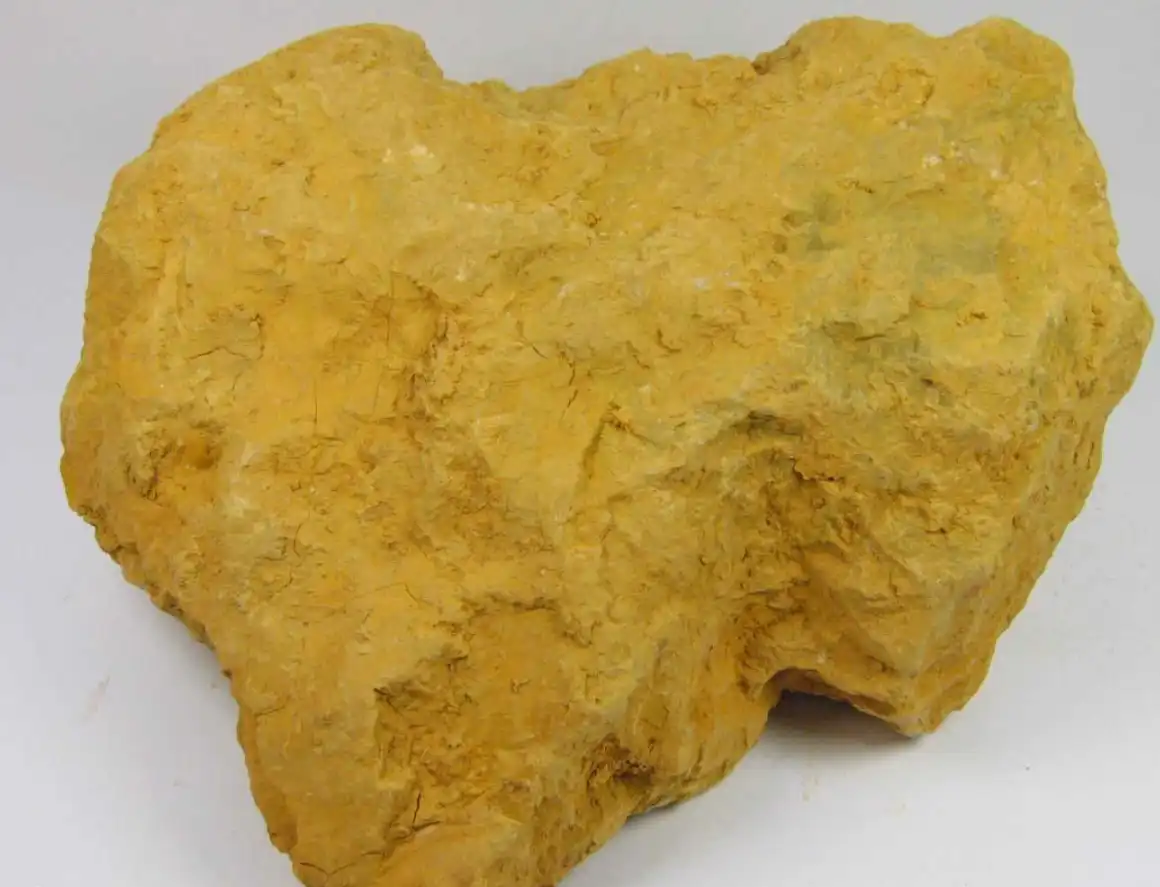
The primary matrix of Hongni is traditionally extracted from the shallow sedimentary siltstone strata of Mount Huanglong. In its raw, unrefined state, it presents a pale, sandy purple-red or yellowish-green color. Its mineralogical profile is rich in quartz granules, illite, and kaolinite, with a total iron oxide (Fe₂O₃) concentration hovering consistently between 6% and 9%. This structural balance creates a highly forgiving clay that behaves as a textbook Zisha material—possessing a modest, uniform shrinkage and excellent mechanical strength. Collectors seeking authentic, unadulterated representations of this mineral class must rely on strict analytical purity standards, such as those detailed in Purity & Safety.
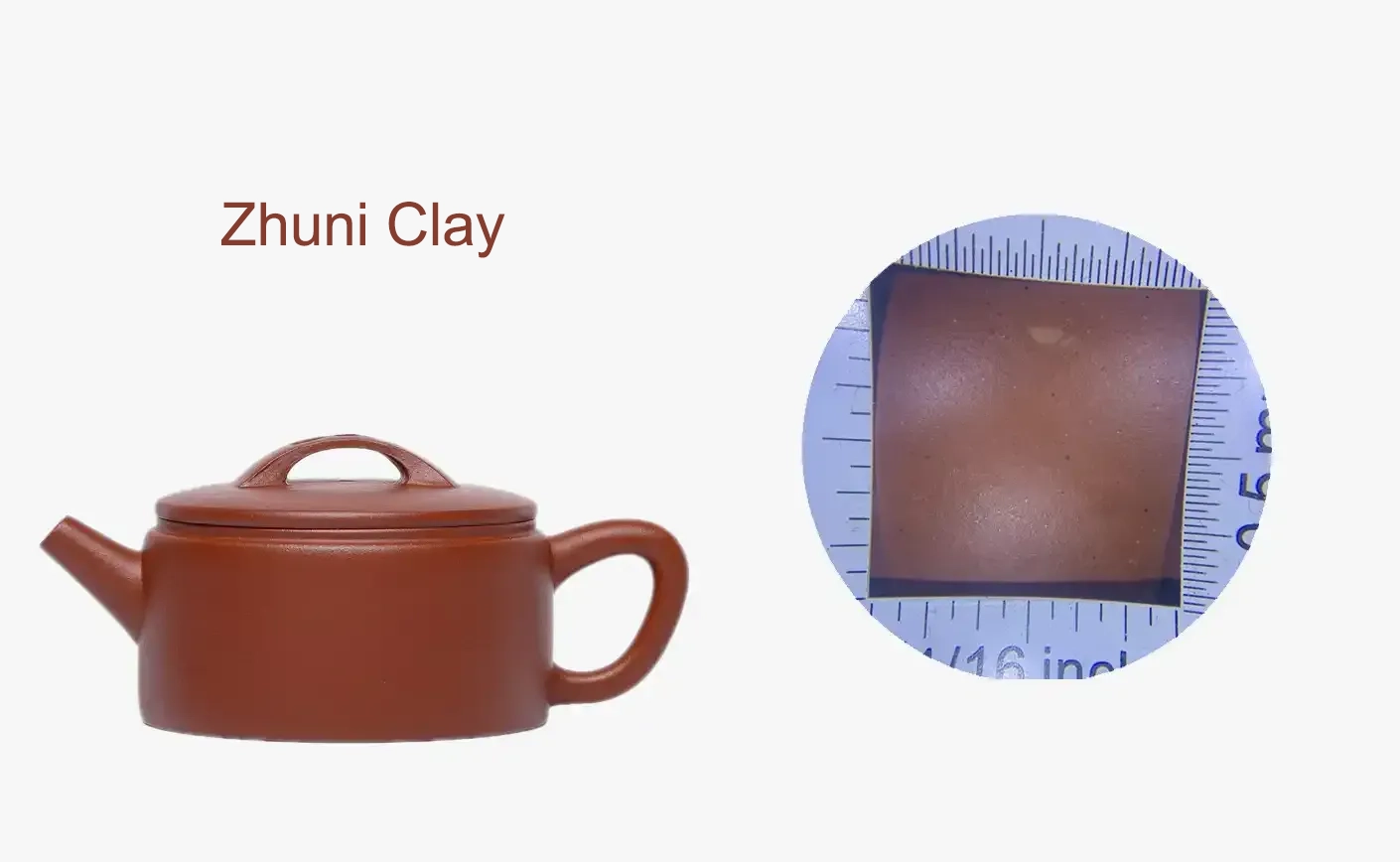
In contrast, Zhuni represents a highly specialized, ultra-refined geological phenomenon. Frequently mined from isolated pockets within the small coal-bearing measures of Zhao Zhuang or Xiaomeiyao, raw Zhuni is not a standard sandy shale, but a highly plastic, oily clay stone composed almost entirely of micro-crystalline hydromica and kaolinite. Its iron oxide content is exceptionally high, often spiking between 14% and 18%, while its internal quartz content is significantly lower and much finer than that of Hongni. This unique absence of coarse structural quartz particles gives raw Zhuni an intense tenderness, rendering it incredibly smooth, slippery, and highly dense prior to thermal processing.
The Ordeal of Fire: Shrinkage Kinetics and Textural Identity
The true physical identity of these red minerals is forged within the extreme conditions of the kiln, where they undergo dramatic structural contraction. Hongni features a high ratio of coarse, internal structural sand particles, which act as a physical stabilizing skeleton during the firing cycle. Consequently, it exhibits a highly stable linear shrinkage rate of approximately 10% to 14%. When fired at its optimal thermal maturity, Hongni yields a Yixing teapot with a beautifully flat, matte, and evenly granular texture, expressing an aesthetic of robust, understated elegance.
Conversely, Zhuni undergoes a magnificent, volatile metamorphosis. Because its mineral composition is heavily dominated by highly plastic, ultra-fine clay particles, its total volume shrinkage during the drying and firing stages reaches a staggering 18% to 25%. This extreme contraction generates tremendous internal tensile stress, causing the clay body to pull inward violently as it vitrifies. This physical phenomenon creates the legendary "wrinkle texture" (皱纹) traditionally associated with the material—a subtle, microscopic network of undulating waves across the ceramic skin. This catastrophic shrinkage rate means a Zhuni vessel is perpetually dancing on the edge of structural failure within the kiln, a challenge that represents a pinnacle of difficulty in advanced Kiln Science.
This high failure rate historically dictated strict physical limitations on the size and shape of the finished ware. To successfully manage the massive internal stress during cooling, master craftsmen traditionally limited Zhuni creations to small-capacity vessels, often restricting them to under 150ml. In this design philosophy, the physical limits of the clay align perfectly with the needs of precision brewing. For instance, iconic forms like the nimble Shuiping, the elegant Siting, or the fluid Lixing are intentionally sized to minimize surface tension and thermal shock risks during production. This exact structural relationship between volumetric constraints and clay dynamics is thoroughly explored within the comprehensive Capacity Guide.
To understand the immense challenge of this high shrinkage, it is helpful to compare it to a highly stable material. While Zhuni experiences a volatile contraction of up to 25% that limits its size, Zini & Dicaoqing clays display a remarkably stable 10% shrinkage profile. This structural stability allows craftsmen to easily execute massive, thick-walled, and structurally complex geometric shapes without risking structural collapse or distortion in the kiln.
Acoustic Vibrations and Thermal Transfer: The Red Clay Brewing Dynamics
When examined through the lens of thermodynamic fluid mechanics, the distinct firing outcomes of these red clays create highly specialized tools for tea extraction. Because Zhuni undergoes extreme shrinkage and contains minimal coarse sand grains, its final fired matrix is exceptionally dense, tight, and highly vitrified. At a microscopic level, its open pore structure is nearly completely collapsed, giving it a physical composition that closely approaches porcelain while retaining the soul of Zisha.
This high density makes a Zhuni teapot an excellent high-speed thermal conductor. It reflects heat energy back into the water instantly, preventing the volatile aromatic oils of the tea leaves from dropping in temperature during the critical initial extraction phase. Furthermore, because its walls are smooth and low in porosity, it exhibits virtually zero absorption of delicate aromatic top-notes. This material profile makes it a supreme pairing for highly fragrant, volatile oolongs, a phenomenon detailed in the specialized mapping of Zhuni Clay Tea Pairing.
In contrast, Hongni preserves a classic, dual-porosity network. Its internal matrix remains highly breathable, providing a slower, gentler thermal release and a modest level of mineral absorption. This pore structure absorbs harsh, high-molecular-weight bitter compounds while allowing heavy, sweet base notes to thrive. Collectors looking to acquire genuine, unadulterated vessels across either of these red clay spectrums can explore certified, artisanal options within the master Zhuni Teapots curation.
The high-frequency aromatic amplification of Zhuni offers a stark contrast to other clay classes. For example, while Zhuni utilizes a dense, low-porosity matrix to reflect and elevate volatile top-notes, Lvni Clay relies on a highly porous, absorbent matrix that softens bitterness and rounds out heavy mouthfeels, serving as an ideal dampener for aggressive teas.
The Metamorphic Glow: Patina Physics and Preservation of Red Vessels
The long-term ownership of an authentic red clay vessel is a dynamic aesthetic experience driven by micro-structural chemistry. Because fired red clays contain high levels of oxidized iron, their surfaces interact uniquely with light. In their initial, unused state, both Hongni and Zhuni display a bright, slightly dry matte crimson tone. However, through the daily ritual of brewing, the open micro-pores on the exterior skin gradually absorb the natural essential oils and polyphenols present in the tea liquor.
Over months of dedicated use, these organic oils saturate the upper micron layers of the clay walls, forming a stable, highly reflective surface layer known as a patina. On a dense Zhuni matrix, this layer creates a brilliant optical phenomenon, shifting the pot's appearance from a dry mineral red to a deep, translucent jade-like gloss that seems to glow from within. To master the technical principles behind this surface transformation, collectors can refer to the structural preservation methods in Patina & Maintenance.
However, because these light-receptive red clays possess high thermal conductivity and rapid contraction characteristics, they require mindful handling. Introducing boiling water directly into a cold red clay vessel—especially a dense Zhuni pot during winter—can trigger catastrophic thermal shock, causing the material to crack along lines of internal stress. To protect these rare instruments from permanent damage, owners must follow the precise preheating and thermal protection guidelines found in Thermal Shock Safety.
FAQ
Why do Zhuni teapots naturally favor small-capacity forms under 150ml?
Due to its high concentration of ultra-fine clay particles and absence of large quartz grains, Zhuni undergoes a massive 18% to 25% shrinkage during drying and firing. This severe contraction generates intense internal physical stress. If formed into a large or thick-walled vessel, the structural tension forces the body to crack or warp during production. Restricting the pot to small, thin-walled shapes allows the clay to absorb this physical stress evenly, significantly increasing its survival rate in the kiln.
Is a Zhuni teapot with perfectly smooth exterior walls an artificial fake?
Not necessarily. While commercial folklore claims that a real Zhuni teapot must be heavily wrinkled, the presence of surface wrinkles is determined by craftsmanship. If an artisan utilizes an expert "mingzhen" (明针) tool to repeatedly smooth and compact the exterior surface clay, or if the clay body is formed with specific structural alignment, the fired vessel can achieve an exceptionally smooth, uniform, and tight exterior skin. True authenticity must be evaluated through mineral purity and pore structure, not by surface wrinkles alone.
Why does a fired red clay teapot produce a distinct ringing tone when lightly tapped?
The high-pitched, metallic ring produced by red clays—particularly Zhuni—is a direct result of high vitrification and density. Because the material is fired at high temperatures and contains very fine clay particles, the internal pore structure collapses completely, forming a highly resonant, glass-like ceramic matrix. When tapped, acoustic sound waves travel through this dense, tightly packed mineral crystalline network with minimal dampening, generating a crisp, high-frequency tone.