Authenticity Protocol: The Insider’s Guide to Buying Real Zisha
In a market flooded with mass-produced "chemical teapots," certificates and laser-engraved seals are meaningless. True authenticity is a product of Physics and Aesthetics.
If you are tired of vague advice, here is the DXY protocol: the hard engineering facts and economic markers that define real Yixing Zisha.
01 / The Physical Barrier: Why Machines Can't Process Real Ore
Can you buy a real Zisha pot made by a machine? The answer is a definitive no.
Authentic Zisha ore is a granular mineral defined by its double-pore structure. Under industrial rolling or high-pressure compression, this natural breathable network is crushed and obliterated. To make clay survive mass production, factories must inject chemical binders and metallic oxides (Manganese, Cobalt) to achieve artificial plasticity.
Furthermore, real Zisha is abrasive. Its high sand content acts like sandpaper on industrial equipment, quickly destroying expensive machine heads. This is why machine-made "Zisha" is actually just fine-silt liquid clay—a dead material with no mineral soul.
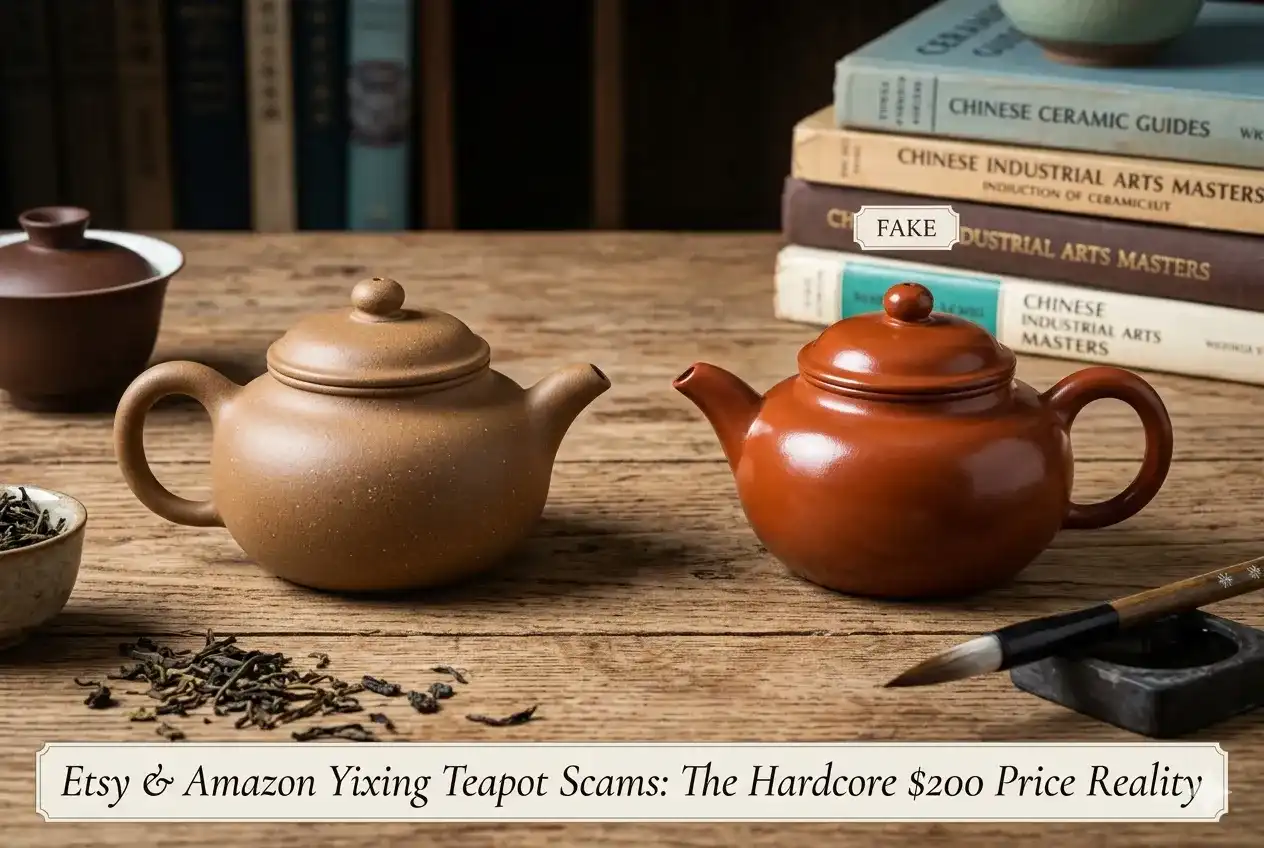
The Zhu Ni Trap: Most low-end fakes are vibrant red "Zhu Ni" pots. Because natural Zhu Ni is fine-grained, it is the easiest to mimic using ordinary red mud spiked with "Iron Red Powder." It’s an aesthetic trap designed for the beginner's eye.
02 / The Cost Floor: The Brutal Math of $200
Do not trust any "Zisha" teapot priced below $200. The math behind the craft is unforgiving:
- The Labor Sink: An artisan spends at least 12 hours on a single semi-handmade pot. This includes beating the clay sheet (Da Ni Pian), forming the body (Lian Shen Tong), and meticulously finishing the spout and handle joins. Skilled labor alone is a $100 daily overhead.
- The Kiln Gamble: After the manual work, the pot face the fire. Firing failure—cracks, warping, or "kiln explosive" (Bao Pi)—is a constant 20%-30% loss.
- Total Baseline: When you account for raw ore costs, packaging, and the rejection of imperfect pieces, the absolute production floor is nearly $200.
Factories produce thousands of pots in a single batch; an artisan produces one. This gap in resource intensity is why genuine ore never meets a mass-market price.
03 / The Aesthetic Audit: The Ultimate Shield
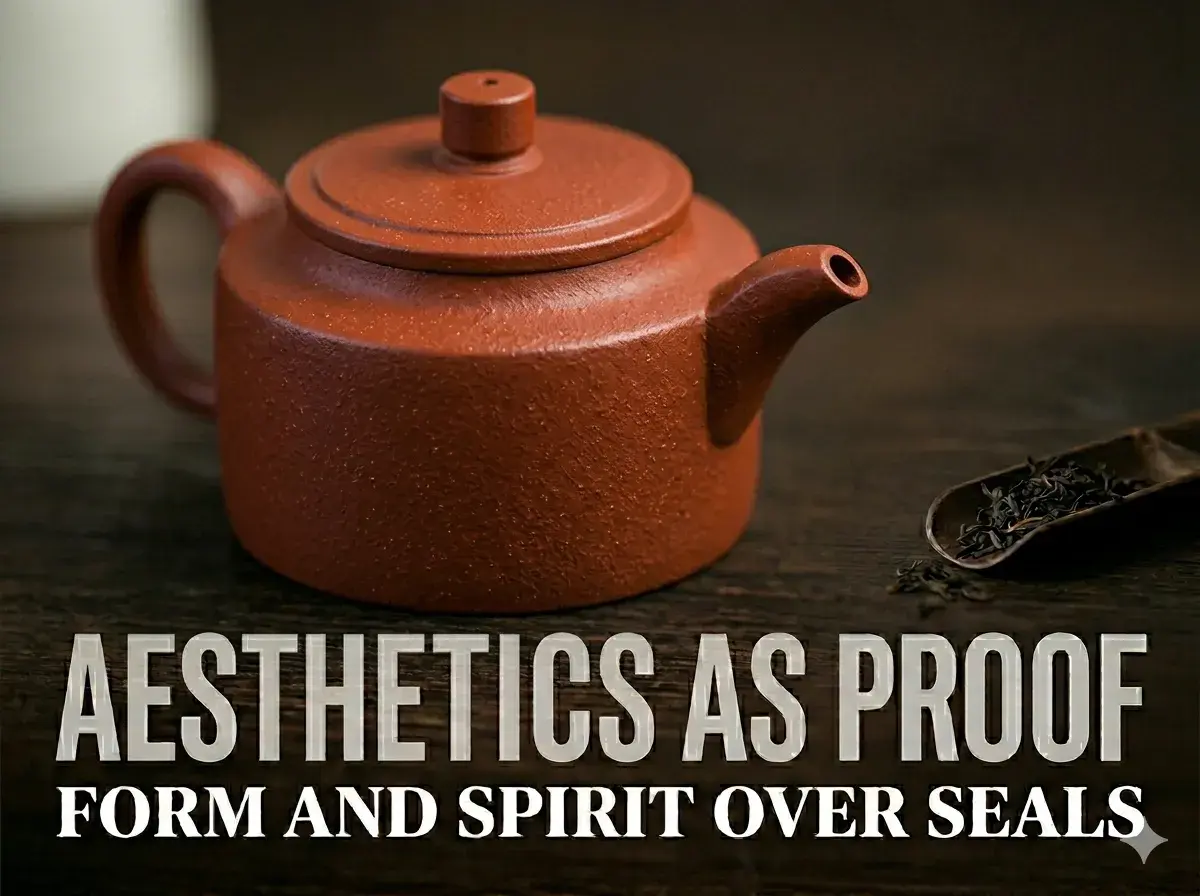
The highest form of anti-counterfeiting technology is Artistic Mastery. A master who possesses the skill to create a balanced, tension-filled form will never "insult" their craft by using chemical-laden clay.
Counterfeiters focus on volume and speed. Their forms are inherently rigid, their curves lack "tension," and their proportions are clumsy. Once you have experienced the "Qi" (spirit) of a true handmade pot—the way the lines flow and the light hits the surface—a fake becomes visually noisy and instantly recognizable. Aesthetics is the only seal that cannot be forged.
Deep Dive
Want to see the technical data on chemical additives? Visit our Knowledge Base for the full breakdown: Authentic vs. Chemical Protocol.